




If your child has ever woken in the night complaining that their legs hurt, you have probably heard the phrase:
“It’s just growing pains.”
It sounds harmless. Reassuring, even. But here’s the thing.
Growing pains are not actually linked to growth.
So if it is not growth causing the pain, what is?
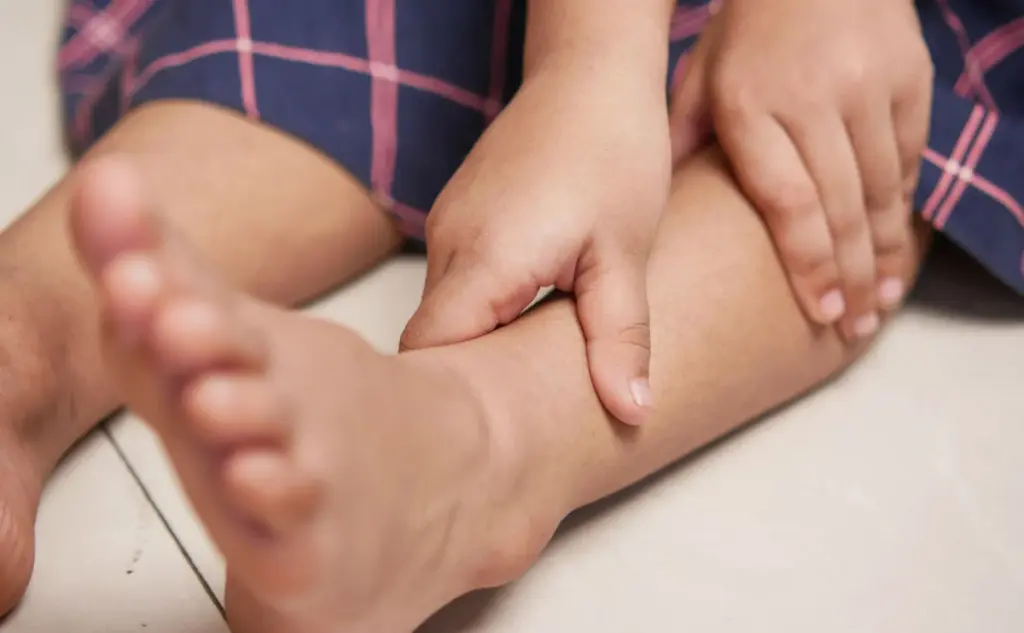
What Are Growing Pains?
Growing pains are a common childhood experience, especially between ages 3 and 12.
They usually show up as:
- Aching or throbbing in the legs
- Pain in the calves, thighs, or behind the knees
- Discomfort later in the day or at night
- Pain that is gone by morning
And while they are common, they are also poorly understood.
Which means we need to look beyond the label.
Why More Kids Are Experiencing Pain Today
Children today are growing up in a very different environment than previous generations.
Many kids are less physically active than ever before, while also spending hours each day on screens.
This combination can lead to:
- Muscle fatigue
- Poor posture
- Increased strain on the spine
- Nervous system stress
In other words, their bodies are doing less of what they’re designed for, and more of what creates tension.
The Role of Posture (Hello, Text Neck)
One major contributor we’re seeing more and more in kids is “text neck.”
When children spend long periods looking down at devices, it changes how the head sits on the spine.
Over time, this can affect:
- Muscles
- Ligaments
- Joint movement
- Overall posture
It has even been linked to headaches, breathing changes, and circulation issues in some cases.
So while your child’s pain might show up in their legs.
the underlying stress doesn’t always start there.
Why Growing Pains Show Up at Night
This is something parents notice all the time.
Your child is fine all day,
Then suddenly, bedtime hits and the pain appears.
This happens because the body has been accumulating stress all day:
- Running and jumping
- Sitting at school
- Screen time
- Carrying bags
- Postural strain
When the body finally slows down, the nervous system “lets go”, and that’s when discomfort becomes noticeable.
What the Research Says About Kids, Pain, and Chiropractic Care
One particularly interesting study looked at nearly 200 children aged 7 to 14 who were experiencing regular headaches (at least once per week).
The children were split into two groups:
- One group received chiropractic care over four months
- The other received a placebo (fake chiropractic care)
Here’s what they found:
- The children receiving chiropractic care had significantly fewer headaches
- Almost half of them reported noticeable improvement
- They also felt better overall
Why does this matter for growing pains?
Because it highlights something important:
👉 Kids’ pain is often connected to how well their nervous system is functioning, not just the area where the pain shows up.
Whether it is headaches, leg pain, or “growing pains,” the body does not operate in isolated parts.
The Nervous System Connection
Your child’s spine protects the nervous system, which controls:
- Movement
- Coordination
- Muscle tone
- Adaptation to stress
When the nervous system is under stress or not communicating efficiently, the body can struggle to keep up with daily demands.
This can show up as:
- Pain
- Fatigue
- Poor recovery
- Emotional overwhelm
Chiropractic care focuses on supporting better communication between the brain and body, helping kids adapt, regulate, and function more easily.
What You Can Do as a Parent
If your child is experiencing recurring aches or “growing pains,” here are a few simple ways to support them:
Encourage movement
Kids need regular, varied movement to develop strong, adaptable bodies.
Reduce screen time
Break up long periods on devices to reduce spinal stress.
Support posture
Small changes in how they sit and move can make a big difference.
Trust your gut
If something feels off, it is always worth looking into.
When Should You Look Deeper?
It is worth seeking support if:
- Pain wakes your child regularly at night
- It is happening frequently
- They are avoiding activities they used to enjoy
- You notice posture changes or headaches
Because while growing pains are common.
they are not something we should ignore if they keep showing up.
The Takeaway
Your child’s pain is real.
And while the label “growing pains” is widely used, it does not always explain why it is happening.
Often, it is the body’s way of saying:
“I’m under more stress than I can currently handle.”
And when we support the nervous system and reduce that stress, everything tends to work better:
- Sleep
- Movement
- Mood
- Resilience
About the Author
Dr Devon (BChiro) is a Px Doc based in Auckland, New Zealand, with a special focus on nervous system health and childhood development.
She has completed advanced training through The Pediatric Experience program and works with infants, children, and families to support healthy neurological function, movement, and regulation.
Her approach combines clinical expertise with real-life understanding as a mum of two, helping families feel confident, supported, and proactive in their child’s health journey.
Haavik, H., Holt, K., & Duehr, J. (2021). They’re not growing pains: Chiropractic care can interrupt the pain cycle in kids. Haavik Research Ltd.