



A Neurologically-Informed Perspective for Auckland North Shore Families
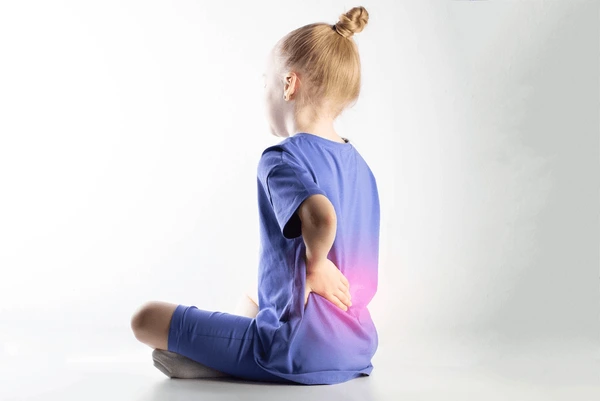
Lower back pain in children and adolescents is more common than many parents realise. By late adolescence, a substantial proportion of young people will have experienced spinal pain at least once.
With modern schooling involving prolonged sitting, devices, and homework, it’s natural for Auckland North Shore families to ask:
“Is sitting causing my child’s lower back pain?”
The research says NO and suggests the answer is more complex than that.
Sitting Is Not the Cause
A 2024 systematic review published in the British Journal of Sports Medicine examined whether sedentary behaviour is a risk factor for spinal pain in children and adolescents.
After analysing 129 studies and more than 697,000 young people, researchers found:
Cross-sectional studies show a small association between sedentary behaviour and reported spinal pain.
Longitudinal studies do not show that sedentary behaviour predicts the onset of meaningful spinal pain over time.
There is no current evidence that sedentary behaviour worsens spinal pain prognosis.
In short:
Sitting does not appear to cause lower back pain in children.
However, sitting is still a biomechanical load. Like any sustained position, it places demand on joints, muscles, connective tissue, and — importantly — the nervous system.
The key issue is not sitting itself.
It is how well a child’s system adapts to load.
Lower Back Pain Is Neurologically Complex
Spinal pain in children is rarely caused by a single structural issue. Research consistently shows it is multifactorial and influenced by:
Previous episodes of spinal pain
Growth spurts
Physical load (sport, school, activity)
Sleep quality
Psychosocial stress
Family history of pain
From a neurological perspective, pain is not just tissue irritation. It is an output of the nervous system based on multiple inputs: mechanical, emotional, environmental, and historical.
When stress load accumulates (academic pressure, social dynamics, fatigue) the nervous system can increase muscle tone and protective patterns around the spine.
This may present as:
Lower back stiffness
Muscle tightness
Reduced spinal motion
Recurrent headaches
Fatigue-related discomfort
The spine is not separate from the nervous system. It is regulated by it.
Why Previous Pain Matters
One of the most important findings in paediatric spinal research is this:
Children and adolescents who experience spinal pain are more likely to experience spinal pain in adulthood.
Adolescent spinal pain is a predictor of adult spinal pain.
This does not mean that damage is present.
It does not mean a child is destined for chronic pain.
But it does suggest that recurring pain reflects patterns in how the nervous system processes load and protection.
Early episodes of pain can influence:
Movement habits
Muscle coordination
Stress responses
Activity confidence
Long-term spinal adaptability
From a chiropractic perspective, this is where early assessment becomes important, not out of fear, but out of prevention.
A Chiropractic Approach: Adaptability Over Posture
At Kindred Chiropractic in Browns Bay, our focus is not on eliminating sitting.
It is on improving neurological and biomechanical adaptability.
When we assess children with lower back pain, we evaluate:
Segmental spinal motion
Joint function
Muscle tone patterns
Movement coordination
Nervous system regulation
Restricted spinal motion can alter sensory input to the nervous system. Over time, this can contribute to altered muscle tone and reduced adaptability under load.
Chiropractic care aims to:
Restore normal joint motion
Improve spinal movement patterns
Support balanced neuromuscular control
Enhance overall adaptability to physical and academic stress
The goal is not posture perfection.
The goal is resilience.
What This Means for Auckland North Shore Families
Rather than focusing solely on reducing sitting time, a more effective approach includes:
Encouraging regular movement variability
Prioritising sleep
Monitoring recurring lower back pain
Addressing stress load
Assessing spinal motion if pain persists
If your child’s lower back pain is:
Recurrent
Increasing in frequency
Limiting sport or activity
Accompanied by headaches or fatigue
It may be appropriate to have their spine and nervous system assessed.
Early attention to recurring spinal pain patterns can support healthier long-term outcomes.
The Bottom Line
Sitting does not appear to cause lower back pain in children.
Lower back pain is neurologically and holistically complex (influenced by load, growth, stress, sleep, previous pain history, and adaptability)
Importantly, spinal pain during adolescence predicts a higher likelihood of spinal pain in adulthood.
An evidence-informed, neurologically focused chiropractic assessment can help support spinal adaptability during key growth years.
If you are an Auckland North Shore parent concerned about your child’s lower back pain, the team at Kindred Chiropractic in Browns Bay is here to provide a thorough, balanced, and research-informed approach.
Article Reference
Montgomery LRC, Swain M, Dario AB, O’Keeffe M, Yamato TP, Hartvigsen J, French S, Williams C, Kamper S.
Does sedentary behaviour cause spinal pain in children and adolescents? A systematic review with meta-analysis.
British Journal of Sports Medicine. 2024.
https://doi.org/10.1136/bjsports-2024-108648
About the Author
Dr Carita de Jong is a chiropractor and the owner of Kindred Chiropractic in Browns Bay, Auckland (North Shore). She has a special interest in paediatric and family chiropractic care, with a strong focus on nervous system function, spinal biomechanics, and long-term resilience.
Dr Carita is certified in the Blair Upper Cervical Technique and is a faculty instructor in this method, teaching other chiropractors advanced spinal analysis and neurological assessment. Her clinical approach integrates evidence-informed practice with a holistic understanding of how growth, stress, movement, and nervous system regulation influence spinal health in children and adolescents.
She works with many Auckland North Shore families to support healthy development, adaptability, and proactive spinal care during key growth years.